
Veergaon Petroglyphs
Prehistoric rock art in Konkan
by
Soham Bhande
Veergaon Petroglyphs: Prehistoric rock art in Konkan
The region of Konkan is vastly known for its beautiful beaches, vast coastlines, green forests and the gift of nature. Yet hidden beneath its lateritic plateaus lies a much older story, one carved directly into stone by people who lived thousands of years ago. These carvings consisting various figures, shapes and animals, known as petroglyphs, are among the most interesting archaeological discoveries of western India and provide a rare insight into the minds, beliefs, and environment of prehistoric communities.
During my exploration of the Veergaon Petroglyph Site in Lanja Taluka of Ratnagiri district, I had the opportunity to witness these remarkable carvings firsthand. Spread across laterite bedrock near a seasonal stream, the site preserves a collection of figures depicting animals, fish, birds, abstract motifs, and anthropomorphic forms. Standing before these ancient engravings, one cannot help but wonder about the people who created them and the stories they intended to preserve.
What Are Petroglyphs?
Petroglyphs or in Marathi known as ‘कातळशिल्प’ or ‘पांडवचित्रे’, are images carved, pecked, or engraved onto rock surfaces. Unlike paintings, which use pigments, petroglyphs are created by removing part of the rock surface itself or by directly carving into it. They are among the oldest forms of human artistic expression and are found across the world, from the deserts of North America to the rock shelters of Africa and the ancient landscapes of India.
In Maharashtra’s Konkan region, petroglyphs are typically carved on exposed laterite stone (locally known as Katal – कातळ ) plateaus. Their themes often include animals, birds, fish, human figures, and geometric patterns. These engravings are particularly significant because they provide evidence of prehistoric life, ecological conditions, hunting practices, and symbolic thought long before written records existed.
Over the past few decades, numerous petroglyph sites have been documented across Ratnagiri and Sindhudurg districts, making Konkan one of India’s most important rock-art landscapes.
Discovering Veergaon’s Ancient Carvings
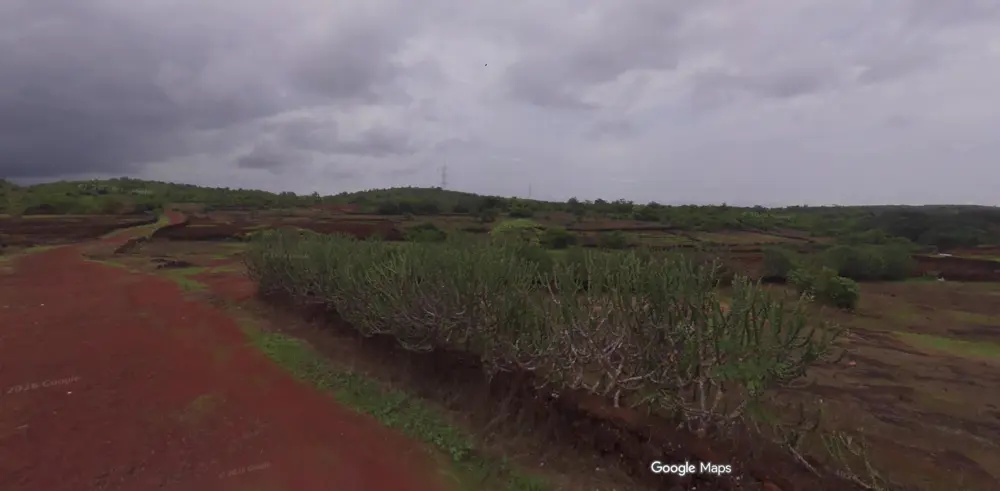
Veergaon is situated in Lanja Taluka of Ratnagiri district, at the foothills of the Sahyadri Mountains. The petroglyphs are located on both sides of a seasonal stream locally known as ‘Sukad’, carved directly into the lateritic bedrock that characterizes the Konkan landscape.
The site consists of two major localities containing more than 23 documented engravings. While some carvings have unfortunately been affected by agricultural activity and land modification, many remain clearly visible and continue to preserve valuable archaeological information.
The Petroglyphs of Veergaon are particularly fascinating because of the diversity of its motifs. Unlike sites dominated by a single theme, Veergaon presents a rich visual record of prehistoric imagination and interaction with the surrounding environment.
Animals Carved in Stone
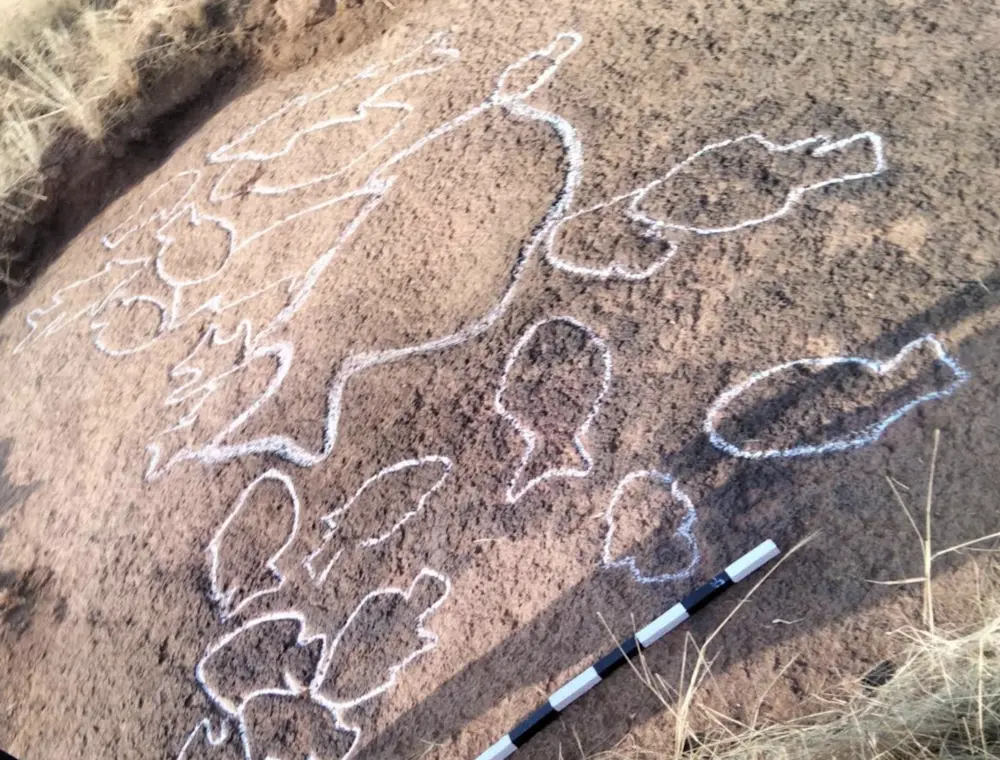
Many of the engravings depict animals, reflecting the close relationship prehistoric communities had with their environment. Researchers have identified carvings resembling Deer, Hare (Lepus nigricollis), Civet (Viverricula indica), possible giant squirrel and other unidentified animals
These figures are generally rendered through simple outlines yet remain remarkably expressive. Their presence suggests a landscape once rich in biodiversity and may reflect hunting traditions, ecological knowledge, or symbolic beliefs associated with particular species.
One of the most important aspects of Konkan petroglyphs is that several animal motifs found across the region represent species that are no longer present in the modern Konkan ecosystem, offering clues about environmental conditions in the distant past.
The World of Fish and Water
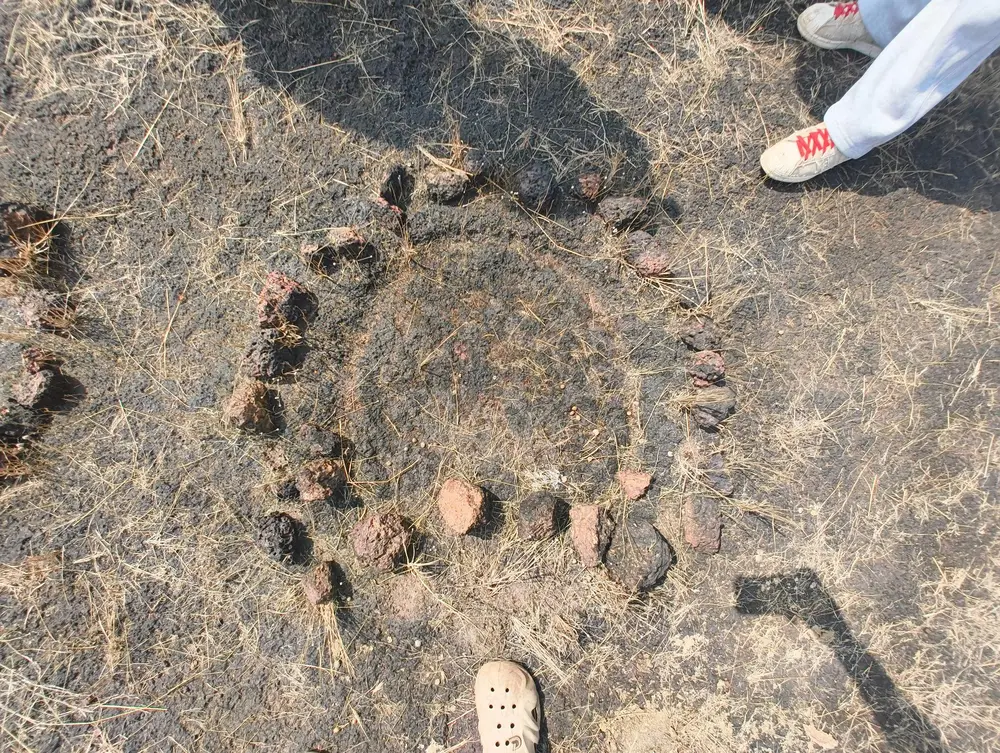
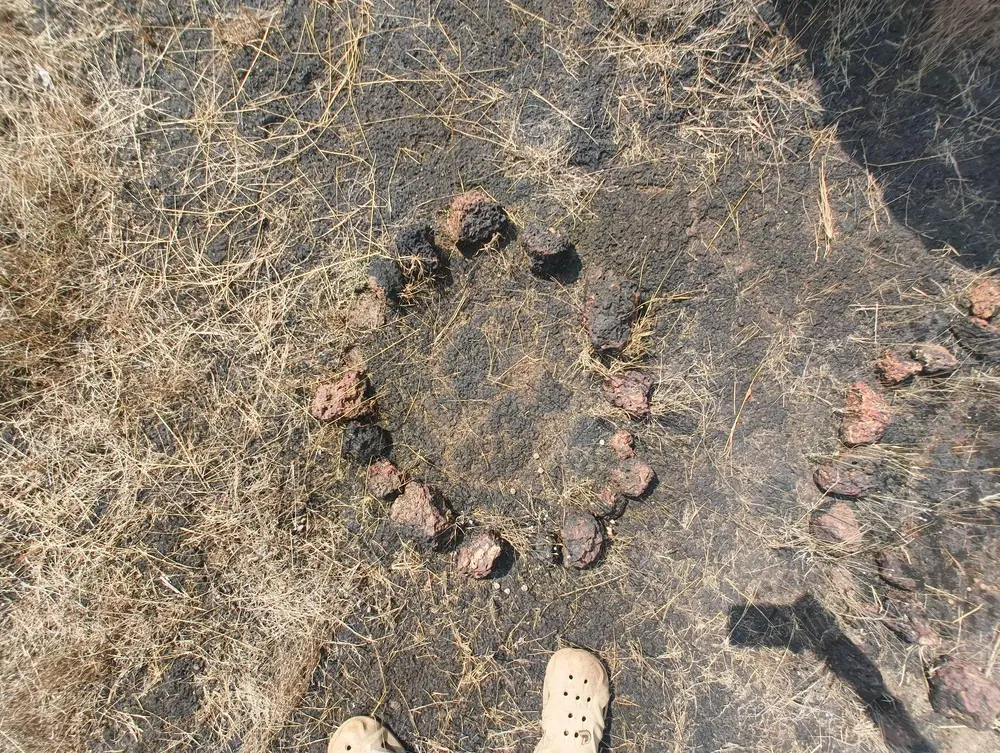
Among the most impressive carvings at Veergaon are the aquatic motifs. A large panel depicts a central fish surrounded by numerous smaller fish, creating a dynamic composition unlike anything commonly seen in everyday art. Another engraving shows a large fish accompanied by four smaller fish arranged beneath it. Yet another fish figure appears to be moving toward a circular water feature carved into the rock.
These motifs emphasize the importance of water resources in prehistoric Konkan. Seasonal streams, rivers, estuaries, and the nearby Arabian Sea would have played a crucial role in the lives of ancient communities, making aquatic imagery a meaningful part of their symbolic world.
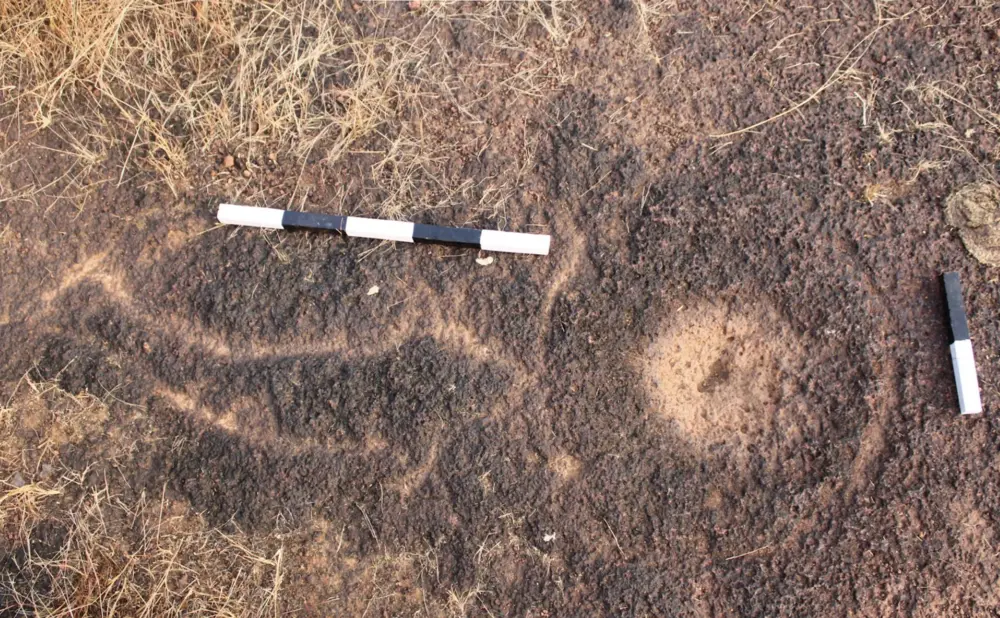
Veergaon, Ratnagiri
The site also contains bird motifs, including a large eagle-like figure measuring over two meters in length. Particularly interesting is a carving interpreted as a possible hunting trap accompanied by a bird-like figure. If this interpretation is correct, it may provide evidence of early hunting techniques and knowledge systems used by prehistoric groups in the region. Such depictions move beyond simple artistic representation and hint at everyday activities, survival strategies, and interactions between humans and animals.
The Veergaon Petroglyph Site is more than a collection of carvings. It represents a valuable archaeological archive that helps us understand prehistoric life in Konkan. The engravings preserve evidence of Ancient biodiversity, human-animal relationships, hunting practices, symbolic and ritual behaviour and Local cultural traditions that continue into the present
Like many rock-art sites across India, Veergaon faces challenges from agriculture, mining, weathering, and human activity. Documentation and conservation are therefore essential to ensure that these fragile traces of the past survive for future generations.
For anyone interested in archaeology, prehistory, or the hidden heritage of Maharashtra, Veergaon offers an unforgettable experience. Standing on the laterite plateau, surrounded by engravings that may be thousands of years old, one gains a rare connection to the people who once inhabited this landscape and left their stories etched into stone.
Acknowledgements
I would like to express my sincere gratitude to Mr. Milnath Patere, Independent researcher, graduated from the Department of Ancient Indian History, Culture and Archaeology, Deccan College Post Graduate and Research Institute, Pune, whose research and documentation of the Veergaon Petroglyph Site greatly contributed to my understanding of the site. I am especially thankful to him for introducing me to the locality, guiding me through the engravings, and sharing his valuable insights during the field visit. His efforts in discovering, documenting, and studying the site have significantly contributed to the archaeological understanding of Konkan’s prehistoric heritage.
References
- Patere, M. (2025). A Discovery of Geoglyphs from Konkan Region, Special Reference of Veergaon Village, Taluka Lanja, District Ratnagiri. In Proceedings of the National Research Conference 2025: Timeless Deccan – Temple Architecture & Iconography. ISBN: 978-81-983822-8-3.
- Garge, T., Kulkarni, B. V., Apte, R., & Risbud, S. (2018). Petroglyphs in Konkan: Historiography, Recent Discoveries and Future Endeavours. Purakala, Vol. 27–28.
- Garge, T., Apte, R., Risbud, S., & Marathe, D. (2020). Discovery of Petroglyphs in Ratnagiri Districts, Maharashtra: A Fresh Perspective on the Dark Age of Konkan. History Today, 21, 4–13.
- Lalit, S. (2013). Petroglyphs Discovered on Laterite in Coastal District Sindhudurg, Maharashtra. Purakala, Vol. 23.
- Dalvi, D. (1990). Maharashtratil Len (Marathi). Granthali Prakashan.
- Ghanekar, P. K. (1995). Koknatil Paryatan (Marathi). Snehal Publication.
The documentation presented here is the result of independent field study conducted by Soham Bhande. All rights to this work remain with the author and are published on Trip and Tales under his authorization. Trip and Tales holds no ownership over this content.
Trip and Tales sincerely thanks Soham Bhande for permitting the publication of his work for the benefit of readers and heritage enthusiasts.